
Latest outage of unit at Pueblo muddles the storyline about Colorado’s energy transition
This column was extracted, at least in part, from the Nov. 21 posting at Big Pivots, and was designed for sharing with newspapers and other media.
by Allen Best
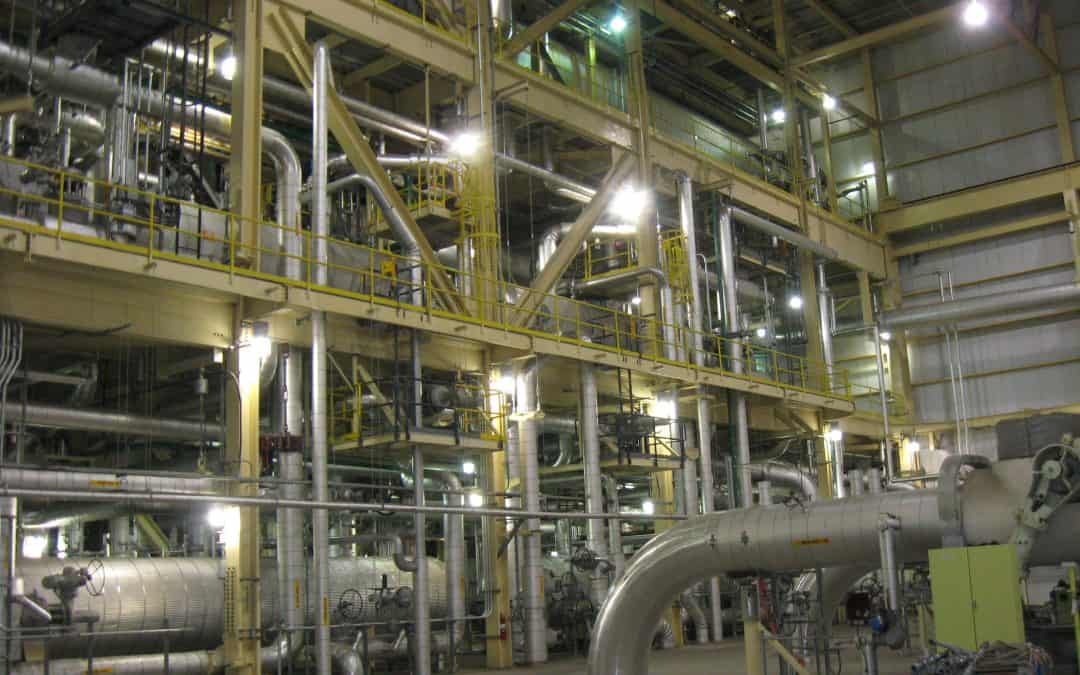
In August 2010, I traveled to Pueblo for a tour of Comanche 3. The coal unit, Colorado’s largest, with 750 megawatts of generating capacity, had begun producing electricity a few weeks before.
“The beast has risen,” said a sign along my tour, which is when I took the above photo.
It had been a difficult birth. Problems had delayed completion by a year. Troubles continued. The unit was down an average of 91.5 days per year during its first 10-plus years. That included 374 days beginning in 2020 and extending into 2021.
In August, 2025, the unit went down again. Xcel Energy, its operator and primary owner, expects the outage to last into June 2026.
Environmental organizations question whether Xcel — and hence its 1.6 million electrical customers in Colorado — should bring back this problematic coal unit. They suggest that letting this coal plant remain silent will be the most effective use of ratepayer money. It is scheduled to retire at the end of 2030.
To ensure the lights — and especially the air conditioners next summer — stay on, Xcel and the administration of Gov. Jared Polis want to delay the retirement of Comanche 2, a neighboring coal-burning unit, for a year beyond its scheduled retirement in December. The retirement has been planned since 2018. The unit is older and smaller. It began producing electricity in 1975 with a maximum capacity of 335 megawatts, less than half that of the newer unit. It has, however, been far more reliable.
The Sierra Club, Natural Resources Defense Council, and others do not challenge the plan. They worry, however, about the emissions if both coal units are operating a year from now. They advocate limits on combined operations. “This allows the same total amount of generation from the two units as if Comanche 3 were available for all of 2026,” they said in a filing with the PUC.
Given Comanche 3’s problems, should it even be brought back to life? “Ratepayers continue to bear the consequences of (Xcel subsidiary) Public Service’s failings when it comes to Comanche 3,” said the City of Boulder in its PUC filing. “At some point, the bleeding must stop.”
That bleeding has been costly. A 2021 report by the Public Utilities Commission staff found Comanche 3, instead of delivering electricity at a cost of $45.70 per megawatt-hour, as had been projected, it had cost $66.25 during its first decade.
Some see parallels to the St. Vrain nuclear plant. That nuclear plant along the South Platte River near Greeley operated from 1976 to 1989. Like Comanche 3, it had problem after problem. Finally, operations ceased. The bleeding continued long after. Customers of the utility that that is now Xcel paid $2 a month from 1993 until 2005 to cover the $125 million cost of decommissioning St. Vrain. The utility then spent $250 million to retrofit it into a natural gas plant.
Why has Comanche been such a lemon? Xcel frowns on that word but the evidence is clear. A former PUC commissioner has suggested that ramping operations up and down instead of chugging along steadily were to blame. What then explains the problems during the first decade?
The 2021 PUC staff report said “poor maintenance practices likely contributed” to the 2020 outage of Comanche 3. The report also pointed to insufficient communication protocols, lack of thoroughness in procedures, and other problems. A jury awarded CORE Electrical Cooperative, the Sedalia-based cooperative that owns 8% of the unit, $26 million because of the year-long outage.
The question before PUC commissioners now is whether the unit needs to be kept online until 2030. After a decade of very slow growth, Xcel now predicts a fast-paced increase in demand for electricity. It has sounded the alarm about “resource adequacy.”
We’re using more electricity for cars and to replace natural gas from buildings. Data centers are the elephant in this story of rising demand. They use electricity, although how much is debatable. Data center developers want more financial incentives from Colorado, while wary environmental groups want guardrails. This will be a key legislative item in January.
Craig provides another element of the evolving coal-burning story in Colorado. Tri-State Generation and Transmission Association has been planning for almost a decade to close one of its three coal-burning units there this December. Tri-State now expects to get orders from the U.S. Department of Energy to keep the coal unit operating into 2026.
A few years ago, Colorado was triumphantly easing out of coal generation in orderly fashion. The narrative has shifted, this energy transition — what I call the big pivot — has gotten more complex.

- We need coal but can we afford Comanche 3? - December 1, 2025
- Consider Jason Crow’s warning in light of Sand Creek - November 26, 2025
- Might Oh Be Joyful be the highest megawatt-scale solar project? - November 24, 2025





850 MW is just too big. All the other “units” at CO’s coal fired powerplants are 520 MW (Craig 3 & Pawnee) or less. Two & 400. The others 200-400. The steam part of our large combined cycle plants is typically 250-350 MW. The one sort of existing “small” modular actually being built occasionally overseas is 300ish MW.
The world standard for decarbonization is adding wind, solar and batteries and replacing coal steam turbines with moderate size gas turbines which can “ramp” and stage much easier. If the claim that ramping of Comanche 3 contributes to its problems is true, then that’s another reason to let it go, as every plan, study, etc., shows us adding wind and solar variable generation which will require more and more “ramping” of batteries and gas backup both going forward.