
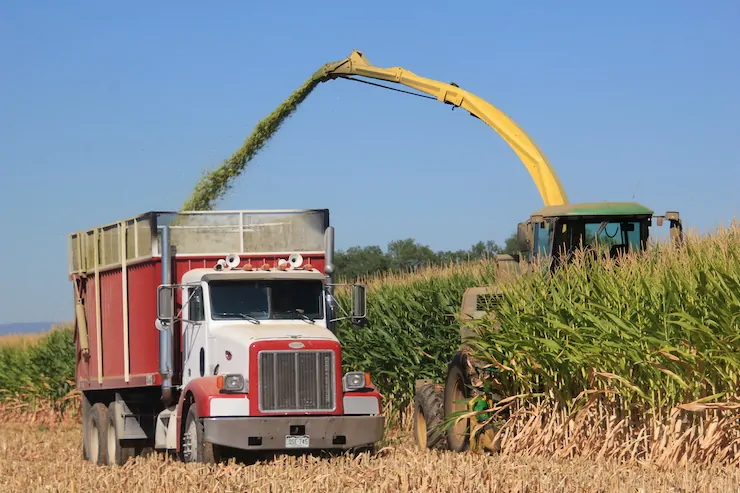
Dust Bowl caused federal government to buy 1.1 million acres. Climate change could justify federal aid to reducee demands on the Colorado River.
by Allen Best
Conferences rarely yield surprising, headline-worthy news. They serve better as a forum for ideas and deepened understandings.
Both were true of this year’s Colorado River conference sponsored by the Getches-Wilkinson Center. The conference at the University of Colorado Law School informed a story in the New York Times, for example, but the story came out 10 days afterward.
Perhaps the most intriguing idea I heard was the notion that the ultimate solution for the Colorado River is to buy down demand. In other words, pay people to give up their right to use Colorado River water.
As one speaker said, the river simply has too many straws in it. Given pre-existing legal entitlements, users won’t voluntarily relinquish their use of water. All water rights have dollar bills attached to them.
Then there is the simple math. The water isn’t there. The imbalance between supply and demand that a decade ago was called a “structural deficit” has ballooned from 1.5 million acre-feet to somewhere approaching 4 million acre-feet.
Might users, at the right price, be willing to surrender their rights?
The idea seems simple enough in the lower basin states, where the straws are few but huge. Several of those straws deliver water to cities, most notably those of southern California as well as metropolitan Phoenix. But agriculture uses 4 to 4.5 million acre-feet annually in Arizona and California. To put this into scale, the lower-basin states are down to using 6 million acre-feet. However, even in recent years they have used in 7.5 million acre-feet.
Colorado has a few big straws, too. Most of them are small, though, and devoted to agriculture. Ensuring the forgone water of a more senior user actually gets downstream would seem to be a logistical nightmare. What would prevent a junior downstream from scooping up the relinquished water? Agriculture uses nearly 90% of water in Colorado compared to 7% for municipal use.
Brad Udall, a scholar/scientist affiliated with Colorado State University, proffered the idea of paid demand reduction during his address, which opened the two-day conference.
“I’ve been called the skunk in the room, a moniker I wear proudly,” Udall said in opening his address. “Last year, however, I was called Eeyore. Eeyore is just kind of a bummer to be around. I mean, he’s just permanently depressed for no good reason. I’m depressed, but I actually have good reasons.”
Udall explicated those reasons. The fundamental story lies in what is happening in the Pacific Ocean, where about 90% of the heat caused by our rampant greenhouse gas emissions gets stowed. What that ocean heat does to atmospheric processes has difficult, even dire implications for the Colorado River Basin.
In his remarks, Udall had many other things to say. One of them was a barbed prod to Colorado and other upper-basin states to get off their high horse.
That case made by upper-basin states — whose representatives are gathered in Denver today — is that the Colorado River Compact of 1922 allocated 7.5 million acre-feet to each basin, but in practice the upper-basin states have used no more than 4.5 million acre-feet. And, lacking big reservoirs upstream, they have been forced to use less in water-short years, in some years just 3.5 million acre-feet.
Colorado and the other headwater states have insisted that their rights to develop further water cannot be impinged.
“Yeah, upper basin, you didn’t cause this,” said Udall. “You can make that case, but you’re part of the problem. And if precipitation continues to (decline), that 4.5 million acre-feet you use may in fact be more than half the water we have.”
The basin states, Udall went on to say, have a unique opportunity to “redo a system that’s been in place for 100 years.”
The usual response to outsized climate change impacts, such as more destructive hurricanes, has been simple. “People rebuild, maybe change building codes, and get on with their lives.”
This is completely different, said Udall, because the heat-induced drought of the Colorado River Basin will force the states — whether they want to or not — to redo 100 years of law and policy around how they manage the water.
“We should not waste this opportunity. Give these negotiators (representing the states) the time and the space and the support to come up with a solution that will get us through the next 25 to 50 years that look so, so problematic.”
Demand must obviously be reduced — and agriculture has the largest straws.
“We’ve got a much smaller glass right now, we’ve got too many straws in it, and we need to pull straws out of this glass,” said Udall. That will be difficult, he acknowledged, but once completed, everybody will be much happier.
In the Q&A, Udall was asked about whether the federal government can control the amount of alfalfa grown, particularly for exports. He didn’t directly answer that question but instead used it to expand his case for buying down demand.
We probably shouldn’t be growing forage crops at the quantities we do, he said, but it should be left to farmers to decide what they want to grow.
Who should pay farmers to cut back? “The federal government, and maybe the states, to some degree,” said Udall.
John Enstminger, the manager of Southern Nevada Water Authority, has often made the point that the federal government often dumps tens of billions of dollars in responding to a hurricane in Florida, for example.
“This is not dissimilar from that,” said Udall. “It evolves differently, but it’s not dissimilar in terms of people impacted and seriousness and need. Would that money be hard to pry out of the government? Absolutely, but that’s where I think it comes from.”
Udall also dismisses temporary demand buy-downs, as have occurred in lower basin states, as wasteful. Aspen Journal’s Heather Sackett notes that much of the $4 billion from the Inflation Reduction Act earmarked for drought mitigation has gone toward short-term conservation. In that program, water users in California, Arizona and Nevada were paid to temporarily leave water in Lake Mead.
California, Arizona and Nevada in May also announced a temporary demand reduction of 3.2 million acre-feet spread across several years.
In the upper basin, a pilot conservation program was rebooted with $45 million paid to farmers to leave their fields dry for two years.
But these are temporary measures. In December 2025, Arizona State University’s Kathryn Sorenson and Sara Porter submitted what they called a “humble” proposal for permanent buy-downs of demand.
The federal government, they pointed out in “Dancing with Deadpool,” a publication of the Colorado River Research Group, enabled what is sometimes called the hydraulic empire of the Southwest through its funding of dams, canals and other infrastructure. Given the new reality of less water, they said, it was not unreasonable to think the federal government could buy down demand.
The gap between supply and demand in the Colorado River Basin has been 1.5 million acre-feet, they pointed out. It is euphemistically called the “structural deficit.” That gap has widened and may settle in at 4 million acre-feet. Best, they say, are programs that deliver permanent — not temporary — reductions in use.
They suggest a list of criteria for choosing to invest dollars in idling lands from irrigation, beginning with those with high historic water use per acre. They see opportunity mainly, but not exclusively, in rural and agriculture land. The land idled from irrigation would be volunteered in response to financial incentives.
In proposing this, they point to a precedent, the Bankhead-Jones Tenant Farm Act passed by Congress in 1937 amid the Dust Bowl and Great Depression. Through this program, the U.S. government acquired more than 1.1 million acres.
“Time may not be ripe for implementation, but robust debate can pave the way for creative and productive solutions,” they wrote. “And, as many Colorado River water managers have noted of late, all options should be on the table.”
Aspen Journalism’s Sackett said water managers — including Becky Mitchell, Colorado representative in basin negotiations— disagree with the idea. So does California’s JB Hamby.
A parallel exists in Colorado’s Republican River Basin. There, over-pumping of the Ogallala Aquifer is different, as is the scale of water. But two federal programs, CREP and EQIP, deliver incentives to withdraw land from irrigated production on either a temporary or permanent basis.
See: “Closer to the end than the beginning.” June 15, 2026.
Also: “Part I: Hard questions about groundwater mining in Colorado.” July 20, 2025.
The story does not lie exclusively in agriculture, though. Nevada’s Entsminger pointed out that the Las Vegas metropolitan area had reduced water use 40% while adding 800,000 people. Too, he said, 40 jurisdictions in the Colorado River Basin and adjoining area had signed a memorandum pledging more efficient use of water in urban landscapes, in some cases removing 30% of non-functional turf.
Entsminger — a graduate of the University of Colorado Law School — also mentioned that the campus had much well-watered grass that appeared to be merely ornamental. It’s called non-functional turf.
“So, yes, agriculture has to be more efficient, and yes, cities have to be more efficient. Everybody has to be more efficient,” he said.

- And what if Ken Salazar had become president? - October 22, 2026
- The miracle of soil and its challenges - October 21, 2026
- Very junior, but water rights they are - October 21, 2026


“Water rights” are, in essence, a license to use water that belongs to the people. If the people have no water to sell the water rights are worthless.
Buying water rights is just another boondoggle to give money to the rich, like PPP money that was supposed to help businesses keep employees employed but did it?
How about if the federal government spends money replacing agricultural flood irrigation systems with drip irrigation?