
Wholesale provider for 44 members across four states in 2016 will be down to 35 by December 2027
by Allen Best
Tri-State Generation and Transmission Association will be losing three more members once a trio of electrical utilities in the Nebraska panhandle leave on Dec. 1, 2027.
In announcing their planned departures, Tri-State noted that the three utilities together comprise approximately 1.9 percent of Tri-State’s utility member revenue and 1.3 percent of Tri-State’s operating revenue. The three cooperatives are based in Scottsbluff, Alliance, and Bayard.
While the numbers are small, they are part of a bigger picture. Tri-State began shedding members in 2016 when Kit Carson Electric in Taos, N.M., left Tri-State to carve out an independent future. Before Kit Carson’s exit, Tri-State had 44 members. Delta-Montrose Electric was next to follow.
Far larger, United Power left in May 2024. The Brighton-based cooperative now has 117,000 members along the I-76 and I-25 corridors north and east of Denver. Those numbers, however, belie the size of United Power. It is Colorado’s largest electrical cooperative based on demand.
Granby-based Mountain Parks Electric left in January. Durango-based La Plata Electric announced its two-year departure in 2024 and will be leaving on April 1, 2026.
In January, another Nebraska utility, Hays-based Northwest Rural Public Power District, gave its two-year notice.
Tri-State will be down to 35 members by the end of 2027 compared to the 44 members it had in 2016 before Kit Carson left.
Tri-State operates in four states. Only in Wyoming has it retained all eight members. Will that remain the case? Tri-State is leaving coal generation, although as of yet it has no plans to divest from its ownership of the Laramie River coal plant near Wheatland.
Kit Carson and Delta-Montrose had indicated dissatisfaction with Tri-State management in 2006 when they declined to extend their contracts with Tri-State by 10 years to 2050. At the time, Tri-State was trying to build a giant new coal plant in western Kansas.
When Kit Carson left, many thought it would stumble. It signed up with Guzman Energy and began building up its local solar capacity, which it completed in 2022. It can now meet all its day-time needs (when the sun is out) via its locally source solar. Guzman provides backup. Delta-Montrose followed with a similar blueprint.
United Power, far larger, followed with a strategy of what Mark Gabriel, the CEO, calls hyper-localization: more solar and batteries within its service territory and, beginning in July, a natural gas plant.
The question posed by these exits from Tri-State is what will remain of once was fondly called the “the family.” To be clear, it is a very different organization than it was eight years ago, but now there are new opportunities for members
The same evolving marketplace has similarly impacted Xcel Energy. Various cooperatives and municipalities that obtained their electricity from Xcel have left or will soon leave. They include six municipalities in the Arkansas River drainage of southeast Colorado, Fountain, and the Yampa Valley and Grand Valley electric cooperatives of western Colorado.
The two electrical providers, Colorado’s largest, are also alike in moving their offices. Xcel earlier this year moved its Colorado headquarters from downtown Denver to the RiNo district a mile or two to the north.
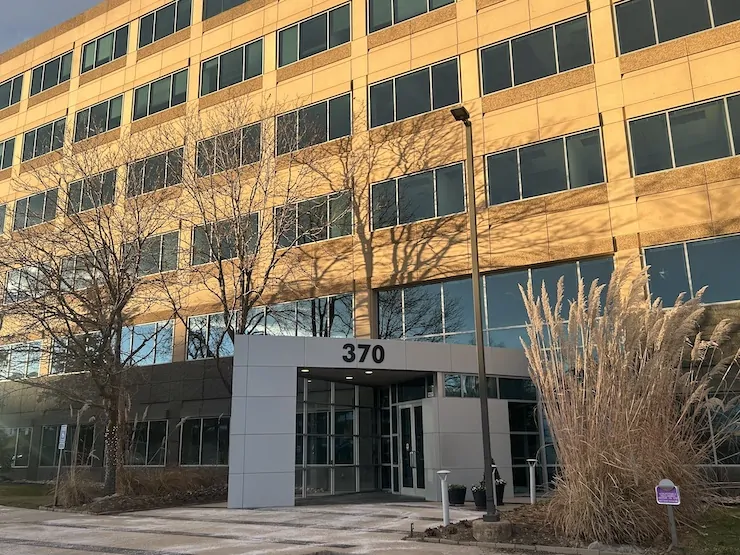
Now comes Tri-State with its plans to leave its building and associated campus in Westminster that it has occupied since 1997 for a new location in the Interlochen area of Broomfield. (See photo above). Tri-State purchased the 152,000 square-foot building for $10.8 million in November. The Denver Post reported that the building had previously been purchased in 2022 for $34.5 million.
Tri-State has yet to decide what to do with its current building and campus, Tri-State spokesperson Mark Stutz told the Post.

- Unexpected voices in the national climate debate - October 6, 2026
- Electrical transmission and interstate highways - October 5, 2026
- Paleontologist to become next CEO of Denver museum - October 2, 2026


Allen,
The important fact that you didn’t mention is that the departing Nebraska co-ops were upset about the recent 7.5 % Tri-State wholesale rate increase and their belief that this is being driven by Colorado energy mandates. The Wyoming members are also vocalizing the same complaint. So, in order to stem further member defections, will Tri-State have to consider a bifurcated rate schedule with a “Colorado” rate and an “everyone else” rate to stem the departure of more Wyoming, New Mexico and Nebraska members. Stay tuned as we are sure to hear more about this issue.
Coal mines run out of coal. Finite resource. Deeper it gets the more costly dangerous and deadly. They’ve already mined the high quality easy to reach coal. What can you say to those who lose their jobs? Tell them– coal mines run out of coal.