
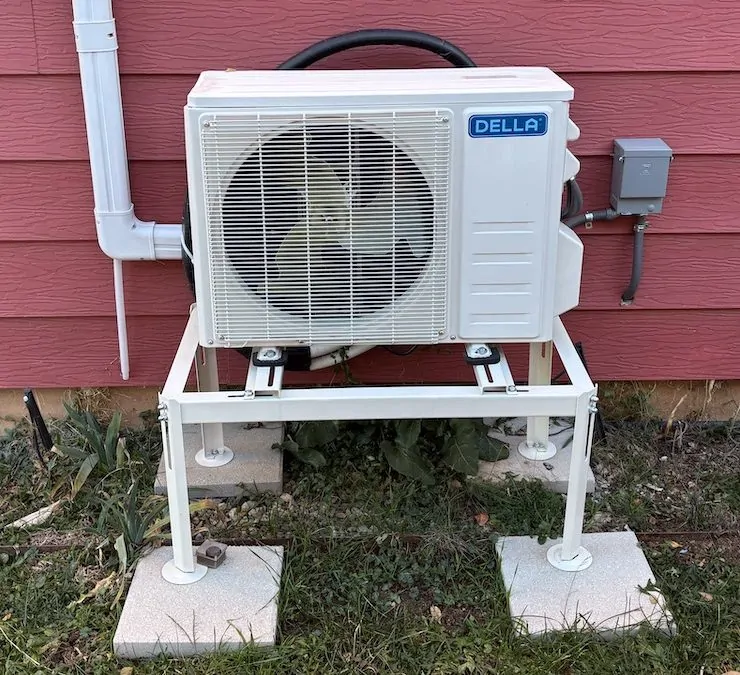
Mini split elevates the electric bill but ends natural gas, a net savings in cost and pollution. Plus, it can deliver cool air in summer.
by Dave Marston
When people talk enthusiastically about going all-electric and getting away from natural gas by installing heat pumps to warm their homes, it almost sounds too good to be true. But I found it is true.
In my experience, heat pumps, which pull heat or cold out of the air, have proven to be more efficient than gas furnaces and relatively inexpensive to install. They’re quiet, nor do they pollute the air. Plus, they deliver a twofer — heating in the winter, cooling in the summer.
I knew I needed help. My family lives in a 2,300-square-foot, drafty, older house, with gas furnaces circulating heated air. There were cold spots, warm air pooling at the ceiling, and we all wore layers, keeping the thermostat as low as we could stand it.
Something had to change, and after I read about air-source heat- pump “mini splits,” I made the move, installing three units in three big rooms as a mostly do-it-yourself project, which included a needed “call in the pros” option.
How do mini splits work? A small outdoor compressor unit connects thin refrigerant lines to a home’s wall or ceiling-mounted “cassette.” Then, a small fan recirculates air over heated or cooled coils, without bringing in fresh outdoor air.
DIY — do-it-yourself — seemed easy on paper, but roadblocks appeared when it came to the key element of connecting sensitive coolant lines. My installation of the first unit was a success, though. I began to envision a career installing mini splits. Halfway through the second install, I realized I was out of my depth and called a local company, Timberline Heating and Cooling, for help. They finished the job, and because I’d done all the basic work — mounting, drilling, running lines — the charge was only $150.
For the last unit, Timberline did everything for $1,100. I also saw the difference between a system that just “kind of works” and one that’s set up properly to last.
Lesson learned: DIY is great until it starts to look like a future DIY repair.
The next wake-up call was my electrical panel. The house still had a 60-amp panel, which was fine decades ago but not adequate for modern electric heating, cooling, and someday, an electric car.
To safely run three mini splits and be ready for more electric stuff in the future, I had to upgrade to a 200-amp service. That alone cost $4,200.
The good news: Not all the money was gone forever. Tri State Generation and Transmission, the former parent of our electricity power provider, La Plata Electric Association, offered a rebate for about half the cost of the materials. That $1,300 back to me took some of the sting out.
Changes in the electricity bills is where it gets interesting.
Before mini splits: Winter gas bills were about $200/month.
After mini splits: Winter gas bills dropped to about $20/month (about $2 for actual gas, the rest just fees for having service).
I kept my old gas furnaces hooked up, just in case. This winter, I plan to shut off the gas entirely and switch to an electric water heater.
Winter electric bills after mini splits went from about $120 to a high of $188. But my usage more than doubled — from about 400 kilowatt-hours to 1,000 kWh. La Plata, my electric coop bakes in high recurring fees, meaning a volume discount. I got rid of a big, dirty gas bill and replaced it with a somewhat higher electric bill, though still cheaper than gas.
On net, the savings have amounted to $100 a month during winter.
In cold weather, the mini splits shine. We used to keep the house at 60°F in winter. Now, we keep it at 68°F, and friends take off their coats.
But the bigger surprise has been cooling. Before, we used swamp coolers for summers. They work by evaporatively cooling outside air to bring cool air into the house — unfortunately along with smoke. Mini splits recirculate the air already inside a house. On smoky summer days, we close all the windows and still stay cool.
If you have mechanical skills and intuition, do it yourself. If changing a kitchen faucet gives you nightmares, then call in a pro for peace of mind. For me, the do-it-yourself work was a sweaty, swearing job, not cheap, and it didn’t go smoothly.
Overall, the change to mini splits on the way to going all-electric was well worth it.
Dave Marston publishes Writers on the Range, an independent nonprofit dedicated to spurring lively conversation about the West. He lives in Durango.

- Ditch the natural gas? Yep, it worked in this house - November 24, 2026
- Contain a wildfire? Call in the cows - September 21, 2026
- Durango waits for a water crisis - March 2, 2026

