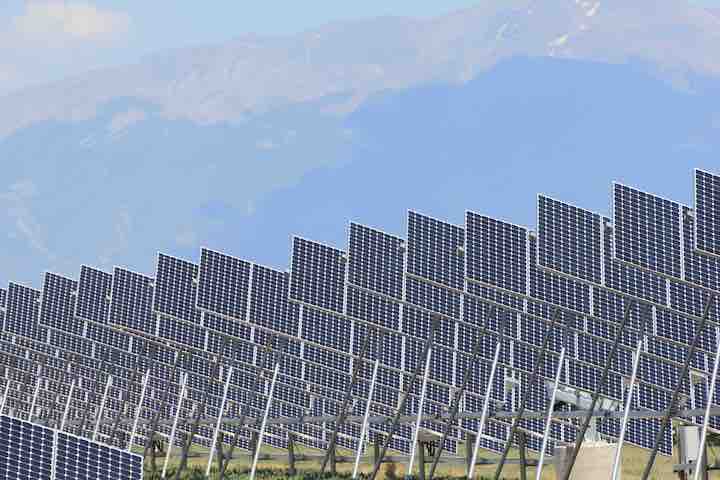
In renewable generation, as in grocery shopping, prices do matter. This former NREL researcher makes the case that Colorado utilities should not be forced to grab some expensive solar when cheaper solar can be had.
The new Roundhouse has begun production. With completion of a solar farm later this year, four northern Colorado communities served by Platte River Power Authority will get 50% of their electricity from non-carbon sources.
The high elevations and generally sunny skies make Colorado’s Middle and North Parks suited for good solar production, and a new solar cooperative hopes to assist that in happening.
Denver aims to integrate more solar gardens into the urban fabric, but with more goals than merely reducing the city’s dependence upon imported electricity.
Colorado officials charged with substantially decarbonizing the state’s economy in the next 10 years are struggling with whether a set of smaller actions can get the job done. Or is something much bigger needed?
Wyoming continues to hope that coal can be burned without producing emissions, a technology proven at smaller scale but expensive. Others in Colorado and New Mexico also have an interest.
Colorado Springs will be shedding its two coal plants during the coming decade. Will natural gas be the bridge fuel, or can a bigger leap be made—avoiding stranded assets in the future?
Platte River Power Authority has announced it will close its Rawhide coal unit by 2030, but many things still necessary to achieve 100% carbon-free electricity.
A new, more muscular tone about climate change is evident in the National Ski Areas Association’s official magazine. Now is the time to elevate the dialogue, says the lead article.
Southeastern Colorado has wind aplenty, almost enough to power the entire state. But that wind is like a farm without a road to market. Why that may change.
As Colorado chooses its path toward 50% decarbonization of its economy by 2030, all the paths involve the state’s regulation of electrical utilities. But there’s more than just closing down coal plants. That’s already underway.
Colorado had adopted rules governing collection of emissions. Some of it is easy enough, other things also impossible to quantify. But has the state moved too slowly? Time to seize the coronavirus—and climate—moment?
The New York Times had a disturbing report that Republican strategists intend to sow fears of the cost of addressing emissions. The trouble is, the fears fly straight into the face of the available evidence.
Rocky Mountain Instittue, the highly regarded think tank, credits Tri-State Generation & Transmission with plotting a a sharp pivot away from coal-based generation to a renewables future.
The decision by the Colorado city of Fountain to get with a new wholesale supplier says an awful lot about the rapidly evolving story of electrical generation. Electricity is rapidly getting cheaper and cleaner.
Colorado’s disputes among electrical cooperatives and also with and against its wholesale supplier Tri-State Generation and Transmission continue. Poudre Valley REA wants to be at the table in PUC proceedings.