
Two small victories for Tri-State G&T
Colorado-based wholesale supplier Tri-State G&T scored two small wins this week in cases involving dissident co-ops United Power and La Plata Electric.

Colorado-based wholesale supplier Tri-State G&T scored two small wins this week in cases involving dissident co-ops United Power and La Plata Electric.

In the effort to achieve cleaner air, it was one step forward then it’s back you go in a decision reversal by the Colorado Air Quality Control Commission

Like those climbing it namesake mountain, Holy Cross Energy sees multiple pathways to the top, 100% renewable energy, which it seeks to achieve by 2030.

Eric Blank has been appointed to chair the Colorado Public Utilities Commission, which has a central role in the state’s decarbonizing of its economy.

A few decades ago 19 below was barely worth mentioning in Fraser, which called itself the icebox of the nation. Now, it is. It’s part of a winter warming trend.

A pilot program of six home batteries represents an effort by Holy Cross Energy to better contour demands around supply as it moves toward 80% renewables.
The Economist say coal is becoming a museum piece (except in Asia), but perfervid hopes remain in Wyoming. More natural gas bans in California. Solar in Utah.

Net zero talk in Vail, Aspen considers climate change and wildfire in 50-year water plan, droughty San Juans, and other energy and water briefs in Colorado.
Colorado Gov. Jared Polis has indicated he will not reappoint Jeff Ackermann to the PUC. Here are 3 individuals he may be considering.

A pilot project in Boulder is testing whether a Nissan Leaf battery can help light a city recreation center—and shave the electric bill for peak demand, too.

Tri-State G&T’s plan to deeply decarbonize its electrical supply in Colorado is voluminous, but it leaves many blanks to be filled in later.

Now 156 years after the Sand Creek bloodbath, Cheyenne and Arapaho have joined with The Wilderness Society to support Blue Sky Mountain to replace Mt. Evans.
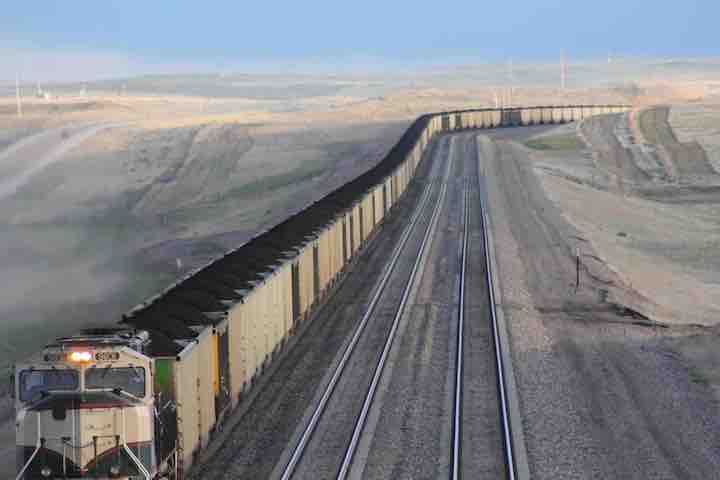
Peabody Coal’s future in Wyoming, Arizona’s solar plus storage, and solar projects in New Mexico as coal plants retire. A roundup of regional energy-transition news.

Colorado’s second biggest electrical utility will soon identify its path to 80% reduced emissions by 2030. Surely this map will include Arizona and Wyoming.

Three Colroado coal plants must retire by the end of 2028, a year earlier than the utilities planned, the state’s Air Quality Control Commission has ruled. Still to be decided: Hayden units 1 and 2.

Greensburg, Kan., rebuilt green erand better after a devastating tornado. Grand County, which lost hundreds of homes to the East Troublesome fire, can too.

Boulder and Cañon City have been going in opposite directions since the 1870s when one took the state prison, the other the state university. They did so again in their utility franchise votes.

Colorado regulators have signaled they want Xcel Energy to consider using securitization to advance retirement of Comanche 3, the West’s youngest coal plant.

In a year of big fires, the East Troublesome may have had the most unsettling as Colorado enters a new era for wildfire, one in which old norms are demolished.

Vibrant Clean Energy’s new study delivers hard numbers about how Colorado electrical consumers would benefit from advanced energy markets, especially an RTO


Join our mailing list to receive the latest news and updates from our team.