

Our Colorado mountain town is being hammered by climate change. We are responding in many ways. But cost matters.
by Ian Billick
In Crested Butte, Republican voter registration barely breaks 5%. Given this political makeup, Crested Butte might seem like a strange venue for dissecting American polarization over climate change.
The national pace of climate action, however, likely lies within the slice of independent voters who swing between parties. As 2024 showed, they determine who wins national elections. That’s true in Crested Butte, too, where 53% of voters have declared themselves politically independent.
The absence of Republicans in Crested Butte lays bare the tension between the push of liberal ambition and pull of fear by unaffiliated voters about the cost of taking action.
Crested Butte has been on the sharp edge of the warming, drying climate. Smoky air has our mountain residents scrambling for air conditioners. This February, a time of frequent 30-below temperatures in the 20th century, rains marred the ski slopes. Fishermen are putting their rods up early as trout struggle to breathe with warming streams holding less oxygen. Down river 45 miles, Blue Mesa Reservoir is two-thirds empty, its water drained to keep Lake Powell from declining to deadpool.
Voters in Crested Butte accept climate change as fact. Incumbent council members ran unopposed in the first election after we became the Colorado’s first municipality to require electrification of new construction as part of our climate action plan.
But the brutal reality of climate change does not prevent grumbling:
“How much did those Teslas the cops are driving cost us?”
“Is the town really paying someone to sort through my trash to understand composting?”
“Really, an extra $400,000 for an electric dump truck?”
Second-guessing council decisions is a well-honored tradition, only made more fun by the absence of context such as the $844,000 state grant for two electric dump trucks.
While it’s easy to dismiss the grousing, the concerns are well placed. Adopting new technology prematurely can be unnecessarily costly. The Gunnison Valley Regional Transportation Authority, which runs buses between the City of Gunnison and Mt. Crested Butte, has struggled to operate compressed natural gas buses. They had been justified in part by reduced emissions.
Mountain Express, which links Crested Butte and Mt. Crested Butte, dodged a bullet when we decided that given the challenges of our climate it was premature to transition to electric buses.
These climate grumblings fit a larger dynamic, a perception that the policies of Democrats are well intended but ineffective — or worse, counterproductive.
Too often, liberals come across as focused on signaling virtue with limited consideration for outcomes or unintended consequences. For example, in the book “Abundance,” Ezra Klein and Derek Thompson argue that Democrats make critical services like housing and health care less affordable by subsidizing demand while decreasing supply through unhelpful regulatory requirements.
Liberal tone deafness can be especially problematic when it involves the cost of energy, which lies at the center of our economy. We see costs personally in our monthly utility bills and visits to the gas pumps. Less directly it is embedded costs of growing food and moving stuff. With rising costs, political independents can easily be persuaded that climate change is just a progressive plot to drive up the cost of living.
Climate activists cannot lose sight of the fact that (according to Ipsos 2026 polling and most mainstream political reporting) affordability is the most important issue to voters, especially independents. Any sense that climate policy is increasing costs, especially without meaningful emissions reductions, reinforces stereotypes that will keep climate-friendly politicians out of office, delaying the energy transition.
As mayor of Crested Butte unaffiliated with a party, I see the tension between liberal aspiration and independent fear play out regularly. In 2025, when Crested Butte updated our 2030 Climate Action Plan, we initially considered a menu of actions without consideration of cost. In some instances, the actions were recommended under the guise of co-benefits (e.g., social equity and well-being) or sustainability (e.g., water conservation, exposure to plastics, and local food production), largely unrelated to carbon emissions.
Council instead decided to prioritize actions based upon cost-effectiveness in reducing carbon emissions. For example, while we have residents who are passionate about composting, curbside composting is costly and makes a limited dent in emissions reductions. We instead supported less costly drop-off collection points for composters. That allowed us to retain nearly full funding from more impactful strategies, such as electrifying buildings and vehicles or encouraging development close to existing mass transit.
As a scientist and an elected official, the energy transition looks inevitable. While physics sets a limit on the affordability of fossil fuels, we have seen dramatic cost savings globally with emerging renewable technology like heat pumps and batteries. Within a few years rooftop solar exploded in Pakistan as cheap Chinese solar panels flooded across the border. According to the writer and climate change activist Bill McKibben, the Pakistanis installed the equivalent of half their national electric grid in 2024. China, presumably driven by economics and energy security, not liberal aspiration, is rapidly converting from fossil fuels to renewables.
President Trump may turn out to be the climate president, accelerating our transition to a clean energy economy as he makes fossil fuels less attractive. Globally, the Iran war is driving up energy costs, limiting short-term oil-and-gas supplies while introducing long-term uncertainty in shipping access to the Strait of Hormuz.
Locally, according to the Colorado Sun, recent federal orders to keep Colorado’s older coal plants operating beyond their planned retirement are estimated to cost ratepayers upwards of $87 million.
These policies create a unique opening for climate activists to demonstrate they can be trusted. According to the Third Way, a think tank focused on moderate policy, polling shows Democrats are now more trusted on affordability, almost an 18% turnaround since 2022.
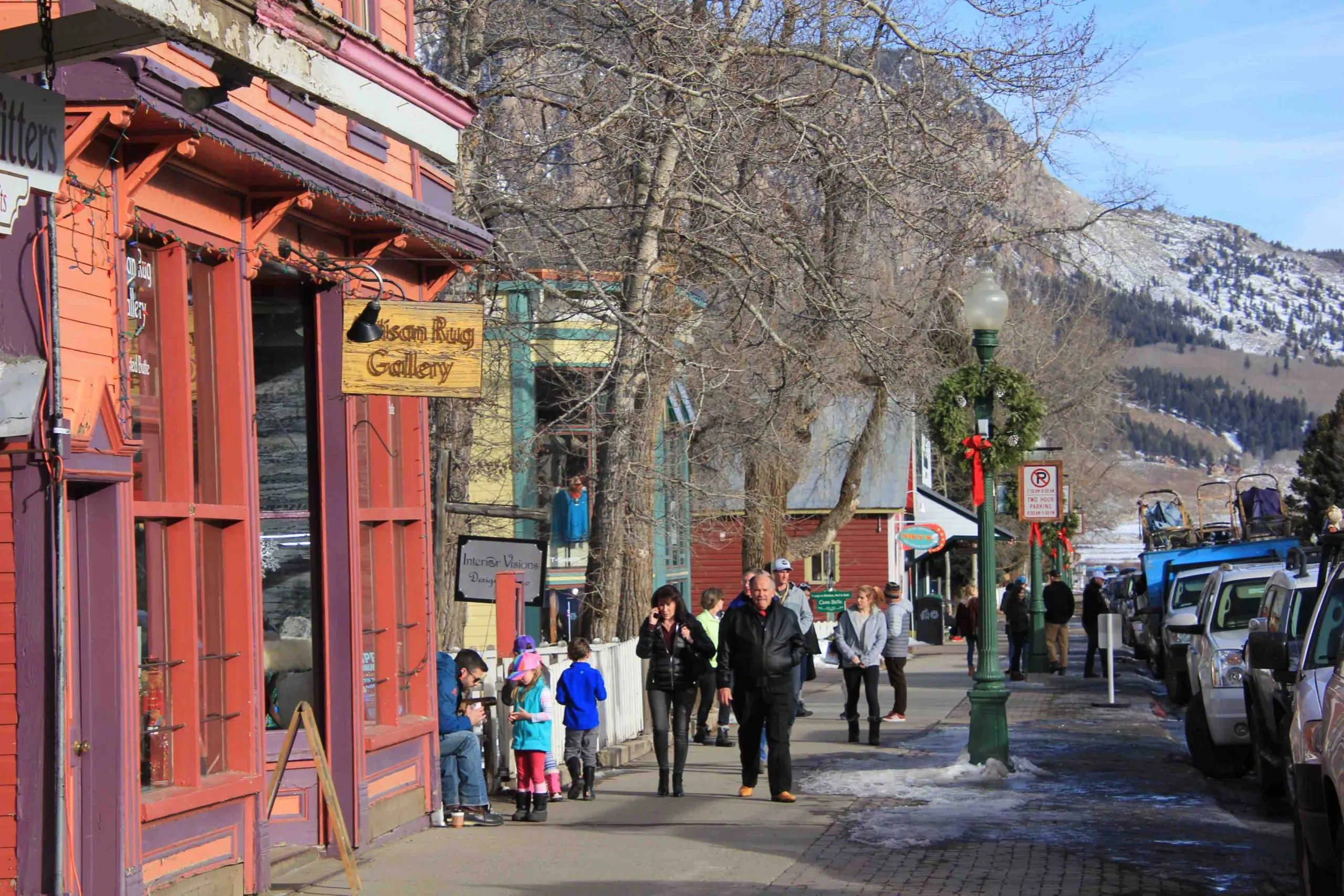
Crested Butte may be small but it has been trying to set a good examples of how to live given the accumulated knowledge about the need to reduce atmospheric accumulations of carbon dioxide and other greenhouse gases. Photo/Allen Best
Taking advantage of this energy opportunity will require discipline. Climate activists need to take the high ground on affordability, avoiding costly stances because they sound good and calling out the fossil fuel industry when they dip into consumer pocketbooks.
For example, while eliminating natural gas sounds appealing, whether it makes sense from a cost/benefit perspective to increase natural gas capacity for baseline power generation while reducing methane emissions along pipelines depends critically upon how fast battery storage technology progresses, an issue climate activists need to navigate carefully.
On the flip side, activists shouldn’t hesitate to call out the potential costs of Initiative 177, the “Right to Natural Gas.” This constitutional amendment in Colorado could be very expensive for consumers as it would require new developments to install costly, redundant natural gas infrastructure. The evidence continues to grow that exposure to natural gas in homes has costly health effects.
Similarly, whether data centers are bad in terms of carbon emissions and affordability will depend upon the details. If renewables power data centers and in doing so they help cover the substantial costs of overhauling the grid to move away from fossil fuels, they will be a net benefit. Even so, communities may reject data centers for other reasons, such as water or loss of agricultural land. If so, as with composting, climate action shouldn’t be used to justify rejecting them, unless supported by the emissions math.
Emerging renewable technology makes it possible to rapidly reduce emissions while making our communities richer and healthier. Still, we will have only ourselves to blame if we move too ambitiously and with limited impact, feeding fear over affordability.
Dr. Ian Billick is a political independent who has been mayor of Crested Butte since 2021. From 2021 to 2025 he was executive director of the Rocky Mountain Biological Laboratory, one of the leading scientific organizations focused on biological responses to climate change.

- Ambition, affordability and the nexus of climate change politics - August 14, 2026

