
Now it’s time to move on
by Auden Schendler
A volleyball-sized chunk of coal was the most coveted item in my Basalt office. Visitors would pick it up and ponder it, sometimes forgetting, as we talked, that they were holding on. Black, shiny, and oddly light, with a name out of science-fiction, “sub-bituminous,” it came from a mine at Somerset, in west-central Colorado.
The rock was so desired that one day I noticed it was gone. It took me only a few minutes to find it on my officemate Hannah’s desk. She had stolen it.
Coal’s attraction is derived from its peculiar ancientness. It fosters the same fascination triggered by a medieval broadsword. It’s a rock that burns, releasing what writer Thom Hartmann eloquently called “the last hours of ancient sunlight” stored in fossilized plants eons ago.
Coal fired the industrial revolution, doing a lot of good in the process. As just one data point, since the 1980s, China’s mostly fossil-based industrialization has lifted 800 million people out of poverty and radically changed their quality of life, according to the World Bank.
But coal is also the greatest climate boogeyman, having contributed more to global warming than any other fuel. Ending its combustion is the sine qua non of climate solutions. And continuing to burn it condemns world populations to untold misery, exponentially undoing the benefits it has provided.
So holding it is like meeting a celebrity from history, but a sketchy, dangerous one: Rasputin, not Gertrude Stein. The environmental movement has demonized coal, and related fossil fuels, including natural gas and oil, for good reason.
Unfortunately, the radical polarization that resulted has created a stalemate, preventing the dialog needed to develop projects and legislation necessary to transition to cleaner fuels. The Trump administration’s disdain for renewables and its irrational support for coal is just one manifestation of this communications failure: in the new politics, you’re either woke and green, or macho and fossil. We need a new narrative.
To be clear, there’s no question that fossil fuel industry executives understood, decades ago, exactly how combustion of their product was warming the earth. And they made a clear decision to monetize the planet’s fossil reserves, regardless of the cost to society. Of course they did: it was one of the biggest financial prizes in the history of commerce. To that end, executives hid science, funded disinformation campaigns, manufactured polarization, and supported sympathetic politicians (and trade groups like the U.S. Chamber of Commerce) to prevent carbon regulation. They won. And fossil fuel consumption grew unabated.
But coal miners were not bad people. They spent decades underground doing famously dangerous work; many later died of black lung, all so we could receive the astounding benefits of electricity, refrigeration, or home heat. Those miners, and peers in equally dangerous oil and gas, plus the fuels themselves, did the dirty work of building the modern world.
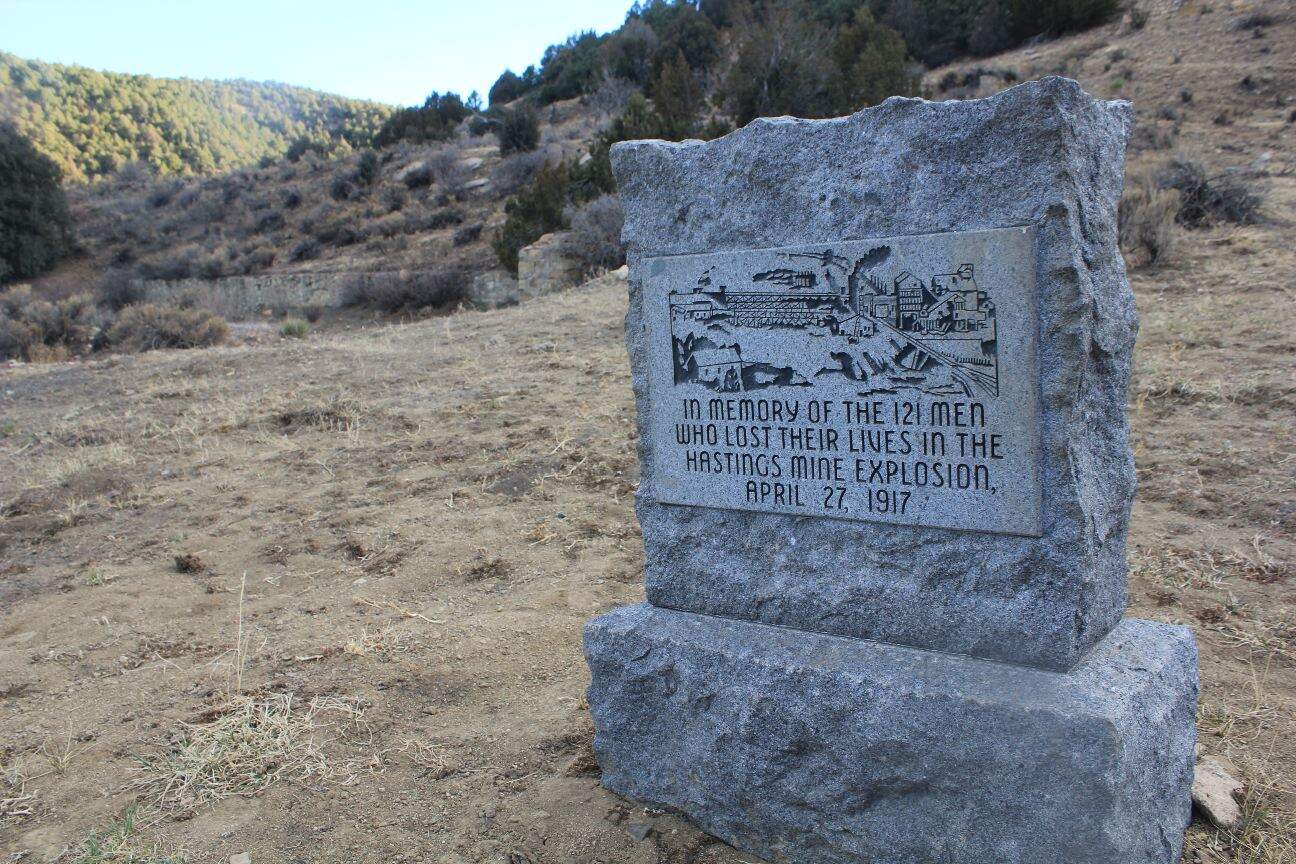
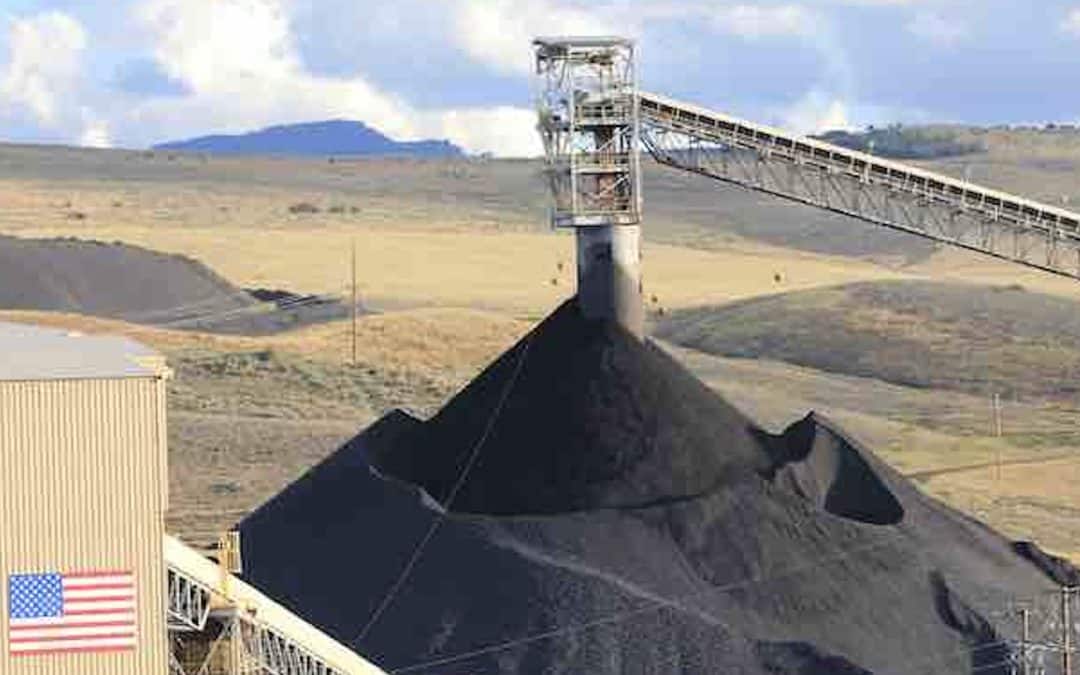
The explosion in the Hastings Mine northwest of Trinidad in 1917, in Southern Colorado, was Colorado’s deadliest mining disaster. It took the lives of 121 men. Top photo: Today, coal mining at the Twentymile Mine, which is between Hayden and Oak Creek in northwestern Colorado, is far safer. Photos/Allen Best
The World Economic Forum reported that in the 20 years before 2015, regions that have experienced huge reductions in poverty, like parts of Asia and the Pacific, increased carbon emissions by almost 200%. Fossil fuels powered agriculture’s green revolution with fertilizers and mechanization.
And while it’s true that the energy access that enabled poverty-killing development can now be supplied more cheaply — and readily — with clean energy, we still owe fossil fuels that debt. Workers from that world make up a portion of our society. They vote, run for office, and make policy. In places like Colorado, they are also your neighbors.
It’s time to separate the leaders from the people on the ground and even tip our hat to fossil fuels themselves as we bid them goodbye. It’s time to say: “thank you.” You fossil fuel industry workers, and the resources you extracted, have created a society that is wealthy and technologically advanced, now capable of making the turn to running itself without carbon pollution. As a society, we now have the capacity to rapidly bend down the curve of warming in a way that protects both economies and people. Should we choose, we together could create a country replete with new and well-paying jobs rebuilding a modern electricity grid, just like the fossil fuel industry helped us do over a century ago.
Moving on also means abandoning doctrinaire positions that get in the way of progress. When former West Virginia Senator Joe Manchin wanted to reduce permitting barriers to new energy projects, environmentalists decried the fact that such regulatory easing would enable new pipelines. That’s true enough, and the bill was a problem, supporting exports of liquefied natural gas, a disaster for the climate. But some form of widespread permitting reform would favor wind, solar and battery storage over coal, oil and gas—because those energy sources are cheaper. Even under Trump, banks are cutting fossil fuel financing. Let coal and pipelines compete. They will lose.
History is instructive on the poor competitiveness of coal. Here in Colorado, Xcel Energy built one of the last, and most modern, coal plants in the world: Comanche 3. It has been plagued with shutdowns and mechanical problems, and never really served coal’s famous role as “baseload” (continuous) power supply. That’s why the Department of Energy’s tweet in August — a sparkling picture of coal, with the caption: “She is the moment” — is so absurd.
So is Colorado Congressman Jeff Hurd’s desire to keep Comanche 2 operating beyond its scheduled retirement, a move the Polis administration also supported after Xcel reported that Comanche 3 would be down until next June. A quarter of U.S. coal plants are set to be retired by 2029, and the last plant built in the United States was in 2013.
Meanwhile, many historically conservative rural electric co-ops are undertaking clean energy transitions. Twenty years ago my region’s electricity came mostly from coal. In September, our electrical cooperative, Holy Cross Energy, hit 96% renewables and will almost surely end the year north of 80%. And Holy Cross has some of the cheapest power in the country.
Importantly, what I am suggesting is not another vapid call for bipartisanship on climate. No such thing exists in the modern political world, where one side denies the problem entirely or worse, considers it good. But we don’t need those people: we need a bare majority composed of those who care. Such a majority constituency exists already.
In my own work, over a decade ago, an outbreak of open-mindedness across the fossil/green divide led colleagues and me to a meeting with an Alabama-born miner named Jim Cooper, a crusty Tommy Lee Jones lookalike who said things like: “sometimes you got to use a two-by-four to get a mule going.” Cooper ran a Colorado coal mine that was leaking methane, a super-potent greenhouse gas.

Bowie Resources primarily operated the Bowie No. 2 Mine near Paonia in the North Fork Valley. It was a significant underground long-wall mine that produced bituminous coal for contracts with the the Tennessee Valley Authority and others. It closed in 2016. Photo/Allen Best
Rather than resist a conversation with environmentalists like Randy Udall and Tom Vessels, who approached him to capture that methane, he was the first in his industry to talk. “Why?” I once asked him. “We don’t even agree on the kind of whiskey we like.” Cooper said: “Because I’m a resource guy, and I don’t like to see resources wasted.”
On that small piece of common ground, he partnered with the Aspen Skiing Co., Holy Cross and other utilities, plus a nonprofit to build one of the first large waste-mine-methane-to-electricity projects in the country. In the process I worked with gas and coal guys who were competent, fair, and decent. None denied that fossil fuel combustion was warming the planet.
That work seeded other progress. Cooper’s colleagues, and my own, developed similar projects to destroy methane leaking from nearby mines. The expertise, and the equipment, all comes from the fossil fuel industry.
An example of what’s possible even in the current politics: U.S. Senators Mark R. Warner of Virginia and Shelley Moore Capito of West Virginia have reintroduced legislation to incentivize the capture and repurposing of methane emissions from mines, putting a bounty on the gas. This bill could enable a wildcatting industry for methane hunters, creating jobs while tackling one of the most potent greenhouse gases. Who would the wildcatters be? Ex-fossil fuel industry workers, among other modern environmentalists.
If an Alabama-born coal miner and a ski-town greenie can find common cause, then coalitions of theoretically opposite-minded citizens in states across the nation, independent of federal influence — and also independent of fossil fuel executive disingenuity and sold-out politicians — can find new and dignified projects and policies to cut emissions while we bide our time for coherent national policy.
In the process we may even geolocate some common dignity; respect and acknowledge history; capitalize on shared autonomy; and rebuild a humanity that feels like it’s slipping away.
Auden Schendler is a minority owner of Switchback Restoration, which owns The Bowie #1 coal mine near Paonia and is destroying waste methane that would otherwise vent to the atmosphere. See: Climate entrepreneurs offer a model for coal mine methane flaring. He is author of the book “Terrible Beauty: Reckoning with Climate Complicity and Rediscovering Our Soul.”

- A death embrace with fossil fuels - July 16, 2026
- When snow runoff is low, so are our spirits - May 11, 2026
- Why light will prevail over darkness - December 24, 2025


A fun read and very well done. A good reminder that we can do a better job with a “just transition” for coal miners and drillers. Their expertise can be well used in geothermal and other industries. Quite a few coal miners from the North Fork Valley now operate similar equipment to that used underground to lay fiber-optic cable across the Western Slope.
I extend the same feelings to the O&G workers. I talked to a few pipefitters at our local Crystal compressor plant two or three years ago. They were replacing the methane-venting pneumatic valves with ones powered with compressed air. Very successful as gaged by the greatly reduced mercaptan odor at the nearby trailhead. But they seemed embarrassed or annoyed to be working on a “green” project.
A good place to start for regulatory reform might be in our Roaring Fork Valley, where some building officials have apparently been adding new requirements for structural engineers and fire marshals to sign off on simple residential solar installations, in addition to the existing code and utility submissions and inspections.
Does that require state or local revision of rules, Fred?
Along similar lines, I have a friend in Craig who worked for the Hayden coal plant for most of his career. Part of his job previously was inspecting components of high voltage electrical equipment for sulfur hexaflouride leaks. That compound is 23,000 times more potent than CO2 as a greenhouse gas. But he was doing it to save money, because it’s expensive stuff. Still, this conservative guy probably did more for the climate than anyone in his region.