‘Big Fix’ authors Hal Harvey and Justin Gillis are optimists but also realistic. It won’t be easy. But they carefully describe the necessary path forward. We need to take some risk, they say, and we need to invest in the future now.
Raw water in Colorado has almost entirely been carved up. Agriculture’s new frontier lies in innovations that produce more food with the same or less water
CRES has been busy in recent years trying to advance Colorado’s clean energy agenda. The most compelling evidence of success is a law that tilts the table on natural gas to favor efficiency measures.
CRES grew 10-fold in membership, held annual conferences, then tried to spread its wings. That didn’t work out exactly as hoped. Why not? Opinions vary.
When running for governor, Bill Ritter thought it important to visit little places sparse on Democrats. He also began talking about a new energy economy.
In 2000, Colorado’s largest utility rejected a major project . Why? A team that included CRES fought back. The result: Colorado Green — followed by others. Others followed.
Colorado in the late 1970s had a convergence of people who thought there had to be another way to power a civilization. Among them were the founders of the Colorado Renewable Energy Society.
A more volatile climate. Closing coal plants. Loss of hydro power. Will there enough electricity if temperatures hit 115 degrees in Colorado and beyond?
Colorado legislators allocated $2 million for turf removal, a crucial response to the Colorado River Basin’s deepening aridification. Is it enough to do much?
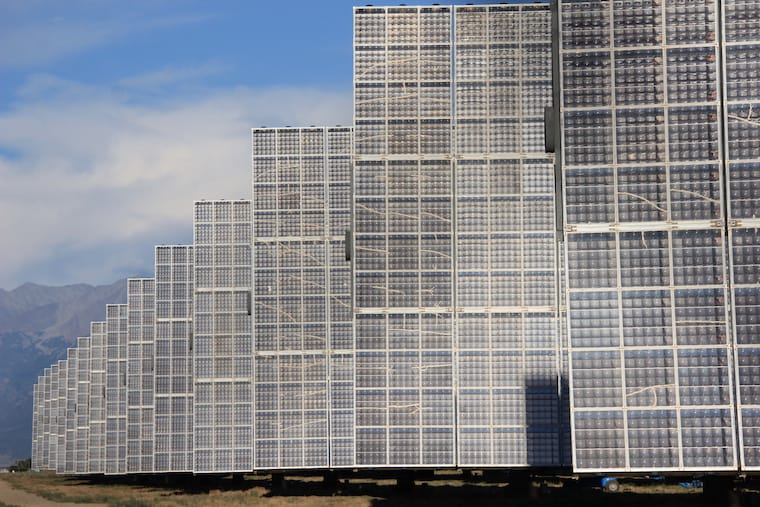
Colorado’s San Luis Valley rips with solar potential but lacks a way to get the electricity to market. What will it take? A conversation is beginning at the Colorado Public Utilities Commission.
PUC chair Eric Blank says Colorado is at a magical place in its energy transition. Can it be example for other states with purplish political complexions?